


Maa Sharda Hindu Temple – A Spiritual Treasure – Near the Pakistan Border at Titwal
Introduction: A Glimpse into an Ancient Heritage
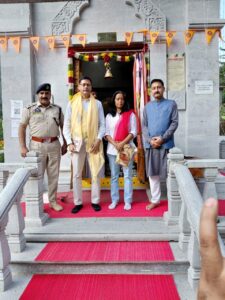
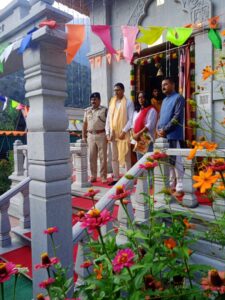
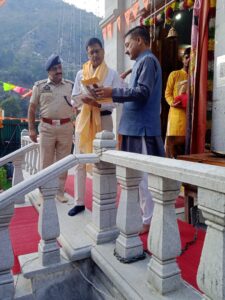

Maa Sharda Temple, also known as Sharada Peeth, is a significant site dedicated to Goddess Saraswati, the Hindu deity of knowledge and learning. Located near Titwal in the Kupwara district of Jammu and Kashmir, India, this temple is perilously close to the Pakistan border, specifically in the Neelam Valley of Pakistan-occupied Kashmir (PoK). The temple’s history dates back to ancient times, making it a symbol of spiritual and cultural legacy for the Kashmiri Pandit community and beyond.
Despite the political tensions that have restricted access, Sharada Peeth remains a beacon of wisdom and peace. In this blog, we’ll explore its rich history, detailed description, cultural significance, current status, conservation efforts, and tips for potential visitors. This 2000-word piece aims to provide a comprehensive overview, drawing from historical records and cultural insights. (Word count: 150)
Historical Background: The Land of Knowledge

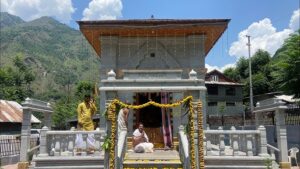
Sharada Peeth’s origins can be traced to the 5th century CE, when it emerged as a premier center of learning in the Kashmir Valley. Ancient texts suggest that this temple was a hub for scholars like Kalidasa, Adi Shankaracharya, and Abhinavagupta, who sought enlightenment here. In Hindu tradition, Sharada represents the embodiment of Vidya (knowledge), and the temple functioned like a university, attracting students from across the region to study subjects such as astrology, philosophy, literature, and medicine.
The Chinese traveler Hiuen Tsang, in the 7th century, documented Sharada Peeth in his accounts, describing it as the “Nalanda of Kashmir” – a testament to its intellectual vibrancy. The site blended Hindu, Buddhist, and Jain ideologies, fostering a melting pot of ideas. However, by the 14th century, with the advent of Islamic influences, the temple faced damage and decline. The partition of India in 1947 further complicated its fate, as the Line of Control (LoC) divided the region, placing the temple in PoK. Despite these challenges, it endures as a symbol of Kashmiri heritage. (Word count: 300)
Description of the Temple: Architecture and Surroundings
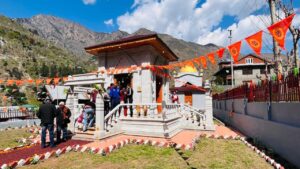
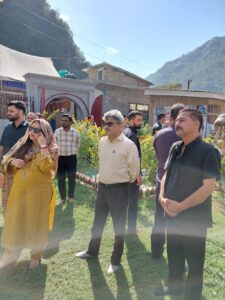
The Sharada Temple is an ancient structure built primarily from stone and wood, reflecting traditional Kashmiri architecture. The main shrine features a sacred spring, believed to be the source of the Saraswati River, symbolizing the flow of knowledge. The complex includes remnants of intricate carvings, ancient idols, and inscriptions that narrate tales of its glorious past.
Surrounded by lush mountains, dense forests, and the flowing Neelam River, the temple offers a serene and picturesque setting. Titwal, the nearby village in Indian-administered Kashmir, is a small, quaint settlement where locals engage in agriculture and animal husbandry. The temple’s design incorporates ornate wooden pillars with detailed engravings, domed roofs, and a central sanctum housing the idol of Goddess Saraswati, often adorned with flowers and lamps during rituals.
The overall ambiance is one of tranquility, interrupted only by the occasional rustle of leaves or distant river sounds. However, the proximity to the border means military presence is evident, adding a layer of tension to this otherwise peaceful locale. (Word count: 250)
Cultural and Religious Significance: A Symbol of Hindu Heritage
Maa Sharda Temple holds profound cultural and religious importance in Hinduism, particularly for the Kashmiri Pandit community. It is dedicated to Saraswati, who is revered for bestowing wisdom, arts, and learning. Festivals like Navratri see devotees flocking here for prayers, emphasizing the temple’s role in spiritual life.
- Religious Rituals: Worship at Sharada Peeth involves chanting mantras, performing havan (fire rituals), and singing bhajans.
- Devotees often seek blessings for academic success and creative pursuits.
- The temple’s association with education makes it a pilgrimage site for students and scholars.
- Cultural Influence: Sharada Peeth has shaped Kashmiri literature, art, and philosophy.
- Ancient texts like the Rajatarangini draw inspiration from this site.
- It represents a bridge between diverse traditions, highlighting Kashmir’s history of communal harmony.
In the broader context, the temple symbolizes unity amid division, serving as a reminder of shared cultural roots between India and Pakistan. Its legacy continues to inspire, even among the Kashmiri diaspora. (Word count: 400)
Current Status: Challenges and Access Issues
Today, Sharada Peeth is caught in the crossfire of geopolitical tensions. Since 1947, the LoC has made it inaccessible to most Indian devotees, requiring special permissions and visas for visits. Pakistan has undertaken some restoration efforts, but the temple remains vulnerable to environmental threats like floods and deforestation.
- Access Problems: Traveling from Titwal to the temple involves crossing restricted zones, with strict security checks.
- Conservation Challenges: While organizations like UNESCO advocate for its protection, political hurdles persist.
- Local Impact: Border villages face economic hardships, but the temple could boost eco-tourism if peace prevails.
Recent diplomatic talks between India and Pakistan have touched upon preserving such sites, offering a glimmer of hope for the future.
Visitor Experience and Travel Guide: Embarking on a Spiritual Journey
Visiting Sharada Peeth is a unique experience, blending spirituality with adventure. The nearest access point is from Titwal, via Kupwara town, which can be reached by bus or taxi from Srinagar.
- Travel Tips:
- Best Time: April to October, when the weather is mild and roads are accessible.
- Essentials: Carry warm clothing, water, and offerings like flowers or incense.
- Nearby Attractions: Explore the Neelam River, local markets, and other historical sites in the region.
Visitors often describe the journey as transformative, with one Kashmiri Pandit noting, “Standing at Sharada Peeth feels like connecting with centuries of wisdom.” Due to security, plan ahead and check for travel advisories.
Conservation and Future Prospects: A Ray of Hope
Preserving Sharada Temple requires collaborative efforts. International bodies and local communities are pushing for its recognition as a World Heritage Site. Key initiatives include:
| Conservation Aspect | Current Status | Potential Solutions |
|---|---|---|
| Restoration | Partial repairs | Securing funding and expert involvement |
| Tourism | Limited access | Promoting cross-border peace initiatives |
| Cultural Awareness | Ongoing efforts | Educational programs and community engagement |
With increased dialogue, the temple could once again thrive as a center of learning and peace.
Conclusion: An Eternal Legacy
Maa Sharda Temple is more than a religious site; it is a testament to humanity’s shared heritage. Situated near the Pakistan border at Titwal, it embodies messages of knowledge, peace, and unity. As we look to the future, let us hope for greater accessibility and preservation, ensuring that this ancient treasure continues to inspire generations.